
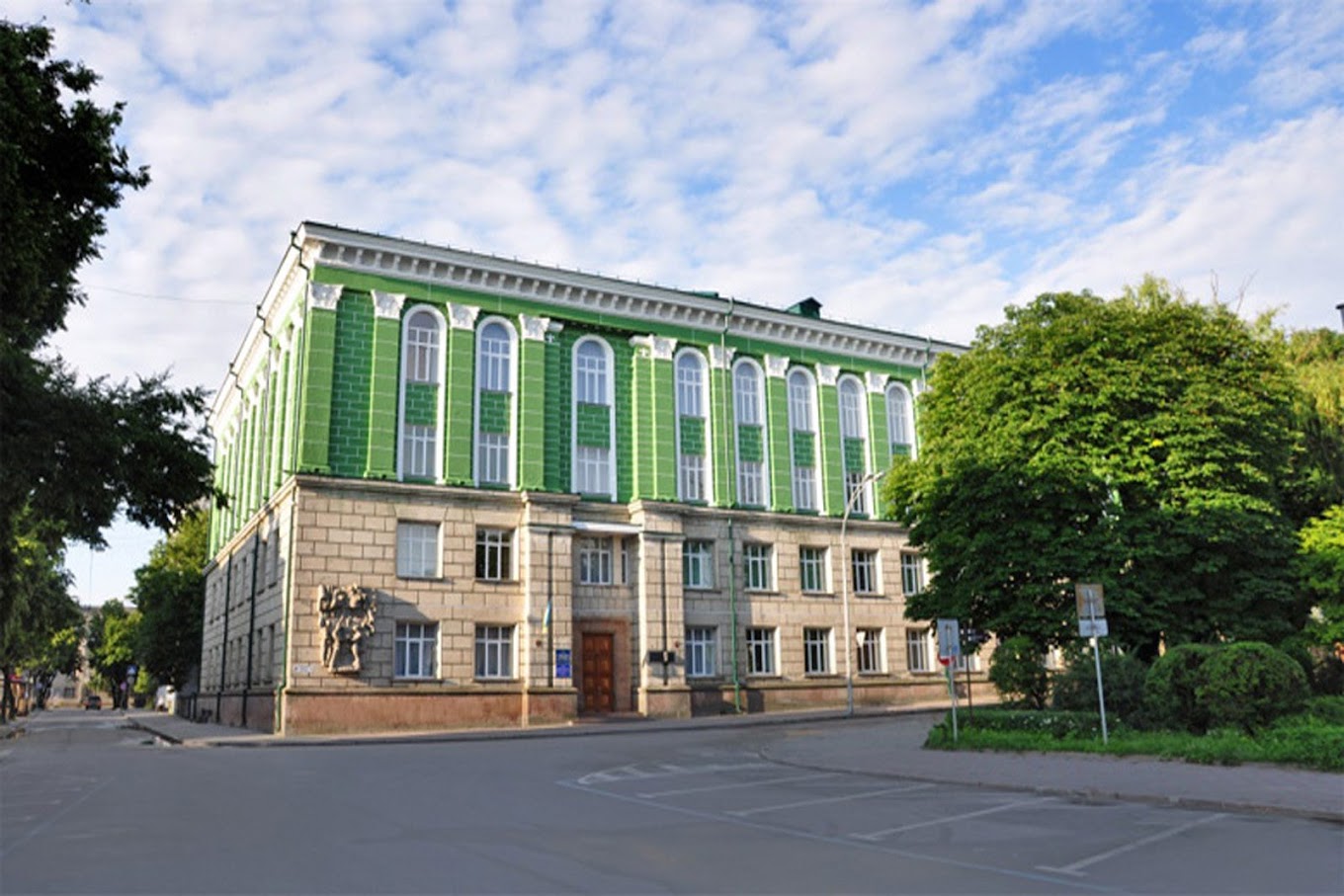
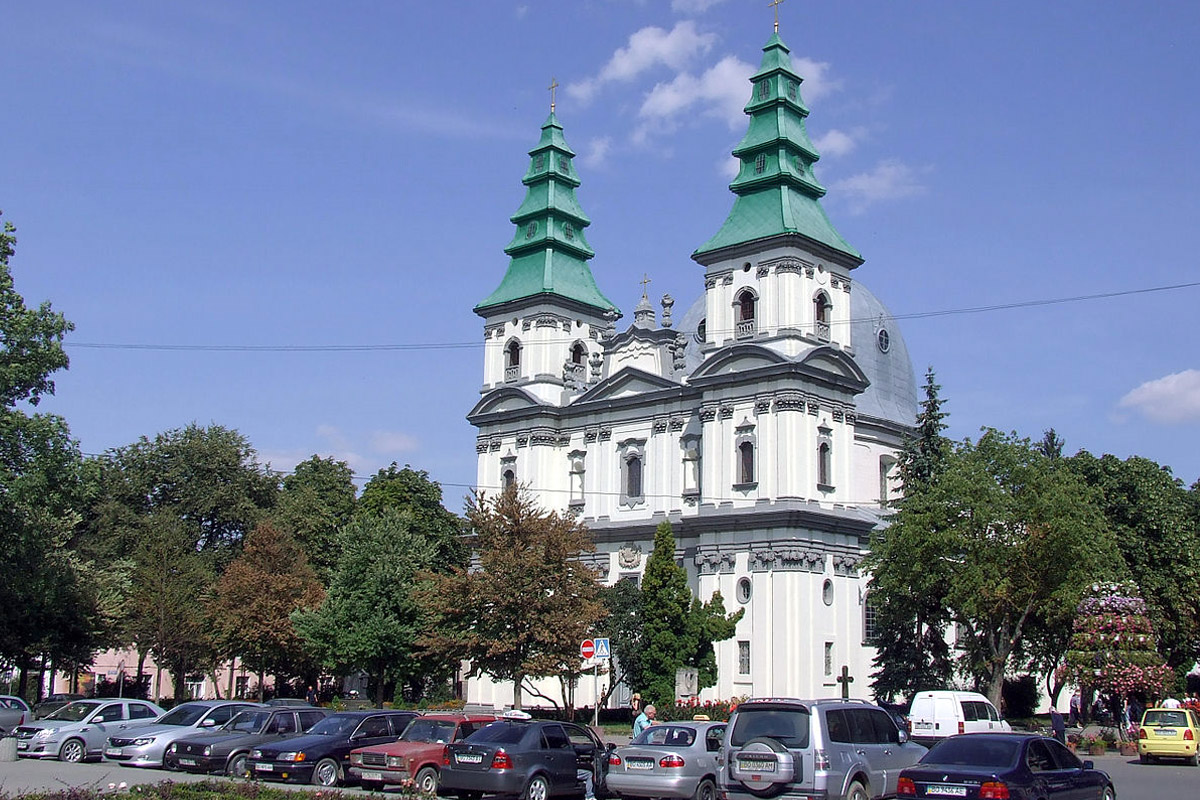
The university was founded on April 12, 1957 as a state medical university. On July 1, 1992, it was named after its patron – Ivan Horbachevsky. On January 30, 1997, it was renamed the State Medical Academy, and on November 17, 2004, the institution was reorganised again, as a result of which it was given the name of the State Medical University.The first Rector of the medical institute was Petro Ohij, and the Vice-Rector – Arsen Martyniuk. By the decision of the Regional Council, two academic buildings and two dormitories were allocated for the institute. The clinical basis was the city hospital, which also served as a regional hospital. At the same time, the construction of a morphological hull, a regional hospital and another dormitory has begun. The institute opened 19 chairs, 66 teachers worked in it, and among them – 1 doctor of science and 17 candidates of science. The Institute’s scientists included Kostiantyn Kovanov, Rostysław-Yurij Komarowski, Anatolij Lokaj, Ivan Sytnyk, Mykola Skakun.With Ukraine gaining independence in 1991, new opportunities opened up for the development of the institute, its entry into market relations and the European educational space. Since 1994, the Institution has had the IV level (highest) of accreditation, and after a rating assessment of all activities in 2000, the university took second place (behind Kyiv) among universities in Ukraine at the IV level of accreditation.Between 2010 and 2011, five academic, educational and practical primary health care centres in rural areas were renovated, equipped and opened. In addition, one of the villages has launched another pilot project – the creation of an educational and practical centre in the field of care for the elderly, based on the experience gained during the training of teachers at the University of the Netherlands.

Among 549 scientific and teaching staff, two-thirds are graduates of this university. 86 doctors of science, professors and 297 doctoral students, associate professors (including 3 members of the National Academy of Sciences of Ukraine, 9 honoured science and technology activists, 2 education workers, laureate of the State Prize of Ukraine in the field of science and technology and 2 honoured inventors and 3 distinguished doctors of Ukraine) work here in 41 branches. Between 2002 and 2012, 58 doctoral theses and 282 master’s theses were defended.In the academic year 2019-2020, 1,556 students from 53 countries studied at the faculty of foreign students (including 98% of them were educated in English).About 250 students from Poland also study at the university. The largest number of students come from African countries (48%, over 700 students, including about 350 people – from Nigeria, which is the highest number among these countries), from Asia – 21%, from the United States – 16%, Europe – 15%. According to the rankings, students from the United States, studying at the university, are in second place among all countries in terms of number – about 270 people.Based on the experience gained from American and European universities, new forms of organisation of science were introduced through the application of the one-day method, a series of practices, co-semester testing of students’ knowledge thanks to independent testing centres, a network of scientific systems that was created in the likeness of the modern European system and is completely different from the technologies adopted in other Ukrainian universities.The introduction of an independent testing centre prevented the emergence of corruption at the University. The lecturers have created 250 scientific and multimedia discs, which contain electronic textbooks, scientific films and test tests. A computerised remote system for monitoring and testing students’ knowledge based on Moodle technology has also been introduced to test their level of knowledge and preparation for classes. There is also a special exam that allows you to test your knowledge from the practical side.There are two scientific councils at the university for the Defence of doctoral and master’s theses from 6 specialisations. National and international forums are held every year.
Cooperation has been established with 78 foreign universities from Europe, the USA, Canada and Asia.
The University cooperates with international organisations: EUA – European University Association, Erasmus Mundus Medea, Erasmus+, World Health Organisation (WHO), United nations (Educational, Scientific, Cultural Organisation), ECFMG – Educational Commission for Foreign Medical Graduates, FAIMER Distance Learning, European Resuscitation Council, Horizon 2020 – The Framework Programme for research and innovation, AIESEC, DAAD Sholarships for Developing Countries.The University is a member of the International Scientific-Educational Innovative-Technological Consortium.A separate and very effective cooperation in the area of scientific projects has been established with the Medical University. Silesian Piasts in Wrocław. Polonez 1 and Polonez 2 programs are being implemented. With the State University of them. Pope John Paul II in Biała Podlaska, projects are also being implemented, including clinical and laboratory tests for the causative agent of Lyme disease in foresters and hunters in the Ternopil and Biała Podlaska area.International summer schools annually conduct events in the field of training, trips and meetings during the summer holidays on the basis of the summer university – “Czerwona Kalyna”.
The experiments are carried out in five laboratories that have passed state accreditation and received certificates of qualification. On August 7, 2008, the Ministry of Health Protection of Ukraine approved the Ternopil Medical University as the main support organisation of higher scientific institutions subordinated to the Ministry of Health of Ukraine. The university has its own Congress Centre. Every year, 30 national and international scientific meetings are held at the University’s Congress Centre. Lectures usually take place in one of 10 large lecture halls, equipped with modern audio-video systems. Practical and laboratory classes usually consist of 8-12 people. Clinical training takes place in affiliated hospitals. Academic departments are located in various buildings around the central part of Ternopil, while clinical departments are located in hospitals. Classes are held from 9 to 3 in the afternoon. The languages of instruction are English, Ukrainian and Russian, depending on the choice.

 Your request has been submitted successfully.